- 05 June 2026
- By Admin
Responsive Website Design and Development Solutions
Introduction
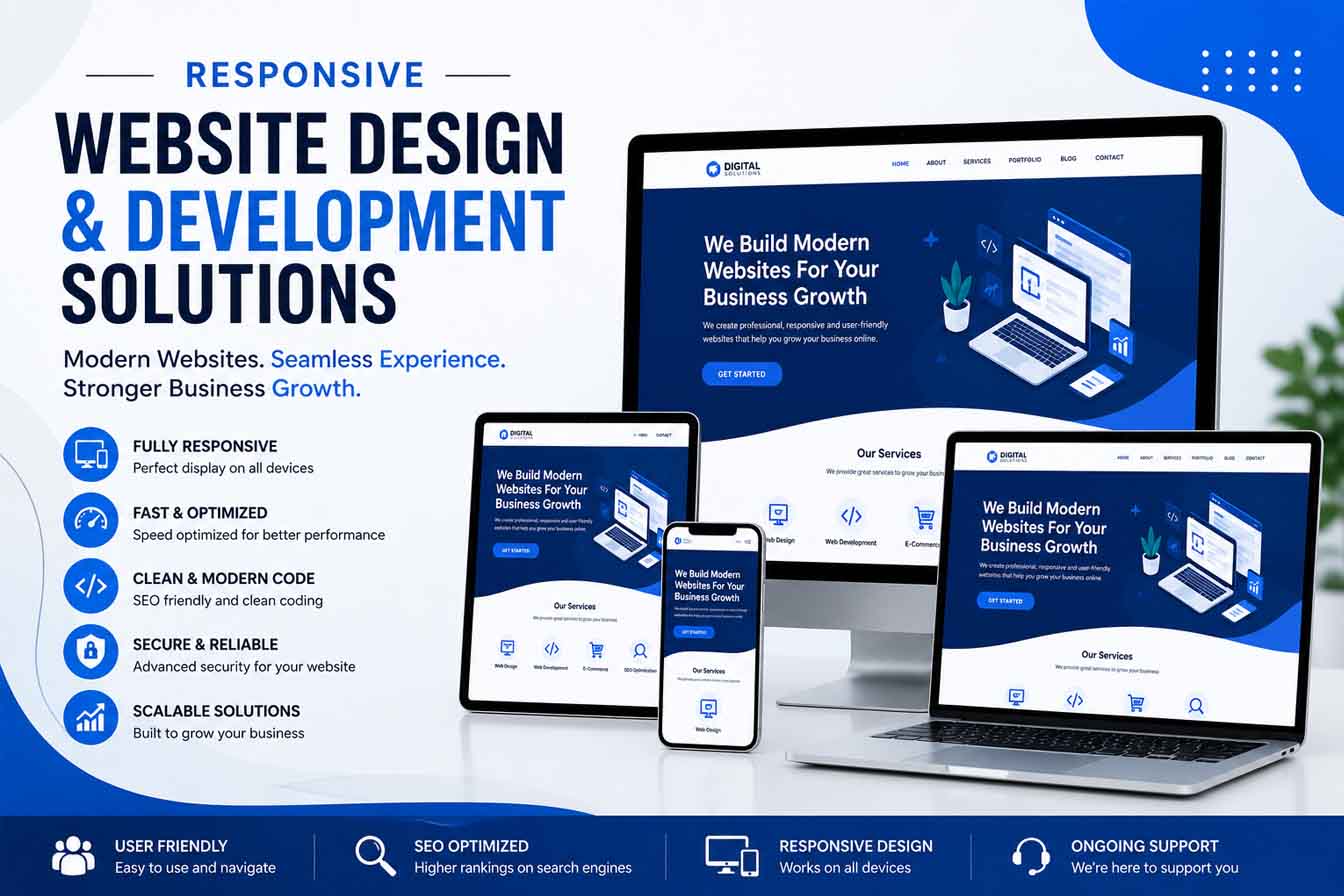
In today’s fast-moving digital world, businesses need websites that are visually appealing, highly functional, and accessible across all devices. Customers browse websites using smartphones, tablets, laptops, and desktops, which means businesses can no longer rely on outdated designs that only work on certain screen sizes. This is why investing in Responsive Website Design and Development Solutions has become essential for companies that want to improve user experience, increase engagement, and strengthen their online presence.
A responsive website automatically adjusts its layout, images, content, and navigation according to the device being used. This flexibility improves accessibility and ensures visitors enjoy a seamless browsing experience regardless of screen size. Businesses that prioritize responsive development gain competitive advantages because users expect websites to load quickly, function properly, and provide smooth interactions across all devices.
Modern web development goes beyond appearance. It focuses on performance, user experience, security, scalability, and search engine optimization. Businesses that invest in professional web solutions position themselves for long-term digital growth.
Understanding Responsive Website Design
Responsive website design refers to creating websites that adapt automatically to different devices and screen resolutions. Instead of building separate desktop and mobile versions, responsive websites use flexible layouts and technologies that provide consistent experiences everywhere.
As mobile internet usage continues growing, businesses must ensure their websites function properly across smaller screens. Poor mobile experiences often increase bounce rates because users leave websites that are difficult to navigate.
Responsive design improves readability, navigation, and usability. Visitors can access information quickly without zooming, scrolling excessively, or struggling with broken layouts.
Companies investing in Professional Custom Website Development Services create websites that remain functional and visually appealing regardless of device type.
Why Responsive Websites Matter for Businesses ?
Modern consumers expect fast and convenient online experiences. Businesses with slow or poorly optimized websites often lose customers to competitors.
Responsive websites improve accessibility because users can browse products, services, and content comfortably on any device. Better experiences increase engagement and encourage users to spend more time on websites.
Search engines also prioritize mobile-friendly websites. Responsive designs improve search visibility because search algorithms reward websites that deliver strong user experiences.
Businesses using responsive development strategies often experience higher conversion rates because simplified experiences reduce friction during customer journeys.
Core Components of Responsive Web Development
Responsive development combines multiple technologies and strategies to create flexible digital experiences.
Flexible grids allow layouts to adapt dynamically according to screen dimensions. These grids prevent design elements from breaking on smaller devices.
Scalable images adjust automatically without losing quality or affecting performance.
Responsive typography ensures text remains readable regardless of device size.
Navigation optimization improves usability by simplifying menus and interactions for smaller screens.
Performance optimization reduces loading times, creating smoother experiences for users.
Businesses implementing Responsive Website Design and Development Solutions for Small Businesses often achieve stronger engagement because visitors enjoy more consistent experiences.
Mobile-First Development Approach
Mobile-first design has become a major trend because smartphones dominate internet usage worldwide.
Developers now prioritize mobile experiences during planning stages before expanding designs for larger screens.
This approach encourages cleaner layouts, faster loading times, and better usability.
Mobile-first strategies improve functionality because developers focus on essential content and features.
Businesses adopting mobile-first approaches often achieve better customer satisfaction because websites prioritize user convenience.
Responsive websites designed with mobile users in mind perform better across all device categories.
User Experience and Website Performance
User experience directly impacts customer behavior. Visitors expect websites to load quickly and function smoothly.
Slow websites frustrate users and increase abandonment rates.
Responsive development improves usability by ensuring buttons, forms, and menus remain easy to interact with.
Clear navigation structures help users locate information faster.
Performance optimization techniques such as image compression and code optimization improve speed significantly.
Businesses investing in SEO Friendly Website Development Services for Businesses benefit because faster websites improve search rankings and user satisfaction simultaneously.
Search Engine Optimization Benefits
Search engine optimization and responsive development work together closely.
Search engines prefer mobile-friendly websites because they provide better user experiences.
Responsive websites simplify SEO management because businesses maintain one website instead of separate mobile and desktop versions.
Improved loading speeds positively influence rankings.
Responsive layouts reduce duplicate content issues and improve indexing efficiency.
Businesses with optimized websites attract more organic traffic and generate stronger online visibility.
Professional development solutions combine technical optimization with user-focused design strategies.
Importance of Website Security
Website security has become increasingly important as cyber threats continue growing.
Businesses handling customer information must protect sensitive data through secure development practices.
SSL certificates improve security and build customer trust.
Regular updates help prevent vulnerabilities and maintain performance.
Secure coding practices reduce risks associated with malware and attacks.
Responsive websites should prioritize both usability and security to protect customer experiences.
Businesses with secure platforms improve credibility and customer confidence.
Ecommerce and Responsive Development
Ecommerce businesses depend heavily on website performance.
Customers expect smooth shopping experiences across devices.
Responsive ecommerce websites improve product browsing, checkout experiences, and payment processes.
Mobile-friendly product pages increase conversions because customers frequently shop using smartphones.
Fast-loading ecommerce websites reduce cart abandonment.
Businesses implementing Modern Website Development for Business Growth strategies often experience stronger online sales because optimized websites improve customer journeys.
Branding Through Website Design
Websites represent brand identity online.
Strong visual consistency improves professionalism and trust.
Responsive websites maintain branding across devices through consistent layouts, colors, typography, and messaging.
Modern design principles help businesses create memorable impressions.
Visual hierarchy improves readability and guides users toward important actions.
Professional web design strengthens brand recognition and improves customer confidence.
Businesses investing in design quality often experience stronger engagement.
Future Trends in Website Development
Technology continuously transforms website development practices.
Artificial intelligence is improving personalization and automation.
Voice search optimization is becoming increasingly important.
Progressive web applications provide app-like experiences within browsers.
Interactive experiences and animations continue growing in popularity.
Accessibility improvements ensure websites serve wider audiences.
Businesses adapting to these innovations maintain stronger competitive positions.
Future-ready websites focus on flexibility, performance, and user-centered experiences.
Conclusion
Investing in Responsive Website Design and Development Solutions provides businesses with opportunities to improve customer experiences, increase visibility, and strengthen digital growth. Responsive websites support users across devices while improving usability, search rankings, and engagement.
Modern businesses require websites that are fast, secure, scalable, and visually appealing. Professional web development solutions help organizations achieve these goals while building stronger online identities.
As customer expectations continue evolving, businesses prioritizing responsive development will remain better positioned for long-term success in competitive digital markets.