- 23 June 2026
- By Admin
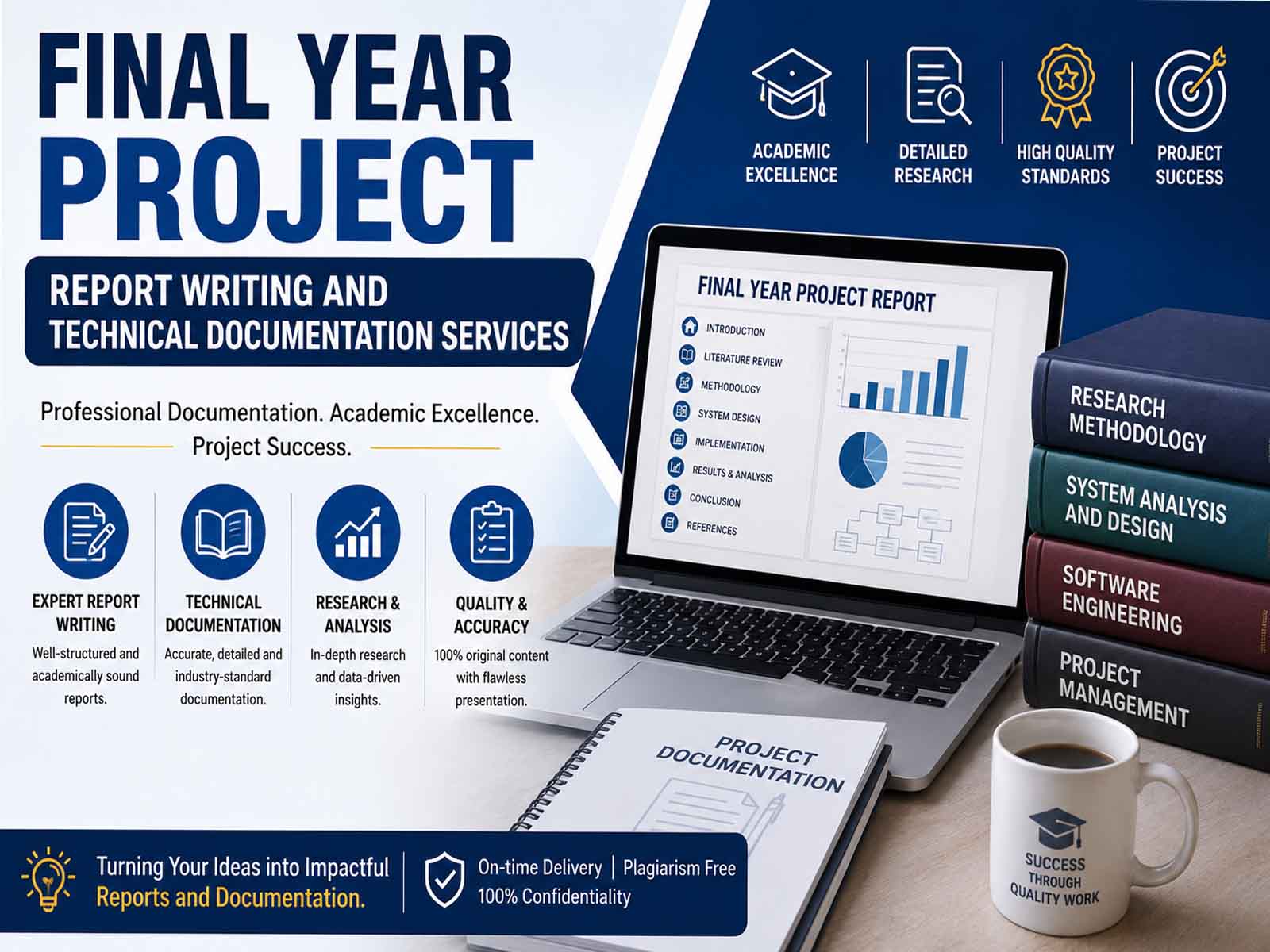
Final Year Project Report Writing and Technical Documentation Services
Introduction
A final year project is one of the most significant milestones in a student's academic journey. It represents the culmination of years of learning, research, practical application, and technical development. Whether a student is pursuing a degree in Computer Science, Information Technology, Engineering, Business Management, Artificial Intelligence, Data Science, or any other professional discipline, the final year project serves as a demonstration of knowledge, skills, creativity, and problem-solving abilities. However, developing an outstanding project is only one part of academic success. Equally important is the ability to document the project professionally through comprehensive reports, technical documentation, research analysis, and presentation materials.
Final Year Project Report Writing and Technical Documentation Services provide students with expert guidance in preparing high-quality academic reports that meet university standards and industry expectations. Professional documentation transforms complex project concepts into well-structured, understandable, and academically sound reports. Through detailed research, organized content structure, proper formatting, and technical accuracy, students can effectively communicate the value and functionality of their projects while enhancing their academic performance and professional credibility.
The Importance of Professional Project Documentation
Project documentation is often considered as important as the project itself. Many students invest months in designing and developing innovative solutions but fail to present their work effectively due to poor documentation. A professionally written report helps evaluators understand the project's objectives, methodology, implementation process, challenges, and outcomes.
Universities and academic institutions assess not only the technical implementation of a project but also the student's ability to document research findings and communicate technical concepts clearly. A well-prepared report demonstrates professionalism, attention to detail, analytical thinking, and academic competence.
Professional documentation also serves as a valuable reference for future researchers, developers, and organizations interested in similar technologies or solutions. Comprehensive reports create a permanent record of project development and contribute to knowledge sharing within academic and professional communities.
Students who invest in quality technical documentation often achieve better academic results because their work becomes easier to evaluate, understand, and appreciate.
Understanding the Structure of a Final Year Project Report
An effective final year project report follows a logical structure that guides readers through every stage of project development. Each section plays a specific role in presenting information systematically and professionally.
The report typically begins with an introduction that explains the project background, objectives, scope, and significance. This section establishes the context of the project and outlines the problem being addressed.
The literature review examines existing research, technologies, methodologies, and industry practices relevant to the project. This demonstrates the student's understanding of the subject area and highlights the uniqueness of the proposed solution.
Methodology sections explain the research methods, development frameworks, tools, and technologies used throughout the project lifecycle. Detailed explanations provide transparency and support the credibility of the work.
Implementation chapters describe system development processes, technical architectures, coding practices, testing procedures, and deployment strategies. These sections showcase practical skills and technical expertise.
Results and evaluation chapters present findings, performance analyses, testing outcomes, and project achievements. Finally, conclusions summarize key accomplishments while recommending future improvements and research opportunities.
Many successful projects incorporate professional academic project report writing and technical documentation consultancy services to ensure every section meets academic and industry standards.
Research and Analysis for High-Quality Documentation
Research forms the foundation of any successful project report. Without proper research, documentation lacks depth, credibility, and academic value. Professional report writing services assist students in conducting comprehensive research that supports project objectives and strengthens academic arguments.
Research involves gathering information from scholarly journals, conference papers, books, industry publications, and reputable online resources. By analyzing multiple perspectives and existing solutions, students can identify knowledge gaps and justify their project approach.
Critical analysis is equally important because it demonstrates intellectual engagement with the subject matter. Rather than simply presenting information, effective reports evaluate strengths, weaknesses, opportunities, and limitations associated with various technologies and methodologies.
Professional documentation specialists help organize research findings into coherent narratives that enhance readability and academic quality. This process ensures that reports remain informative, engaging, and aligned with university expectations.
Technical Documentation for Software and Engineering Projects
Technical documentation plays a vital role in software development, engineering design, and technology-based projects. It provides detailed explanations of system architecture, functionality, workflows, algorithms, and implementation processes.
For software projects, technical documentation may include database designs, UML diagrams, system architecture models, API documentation, user manuals, and testing reports. These materials help evaluators understand the project's technical complexity and operational capabilities.
Engineering projects require detailed documentation of design specifications, calculations, material selection, manufacturing processes, performance evaluations, and safety considerations. Accurate documentation ensures transparency and supports project validation.
Professional documentation services ensure technical details are presented clearly and accurately while maintaining consistency throughout the report. Complex concepts are explained in a manner that allows both technical and non-technical audiences to understand project objectives and outcomes.
Organizations often seek graduates with strong documentation skills because effective communication is essential for successful project management and collaboration in professional environments.
Enhancing Academic Credibility Through Professional Writing
Academic credibility depends heavily on the quality of written communication. Even highly innovative projects may receive lower evaluations if documentation lacks clarity, coherence, or proper formatting.
Professional report writing focuses on maintaining academic tone, logical structure, grammatical accuracy, and citation integrity. These elements contribute significantly to the overall quality and professionalism of the final submission.
Proper referencing demonstrates academic honesty and acknowledges the contributions of previous researchers. Citation standards such as APA, Harvard, IEEE, and MLA must be followed consistently throughout the document.
Clear writing allows evaluators to focus on project content rather than struggling to interpret poorly structured information. Professional documentation improves readability, enhances comprehension, and creates positive impressions among supervisors and examiners.
Students often benefit from custom final year project documentation and research report development solutions, which provide tailored support based on specific academic requirements and project objectives.
The Role of Technical Diagrams and Visual Documentation
Visual elements significantly improve the effectiveness of technical documentation. Diagrams, charts, graphs, flowcharts, and architectural models help communicate complex concepts more efficiently than text alone.
Software projects frequently utilize use case diagrams, sequence diagrams, entity relationship diagrams, and process flowcharts to illustrate system functionality and interactions. These visuals provide clear representations of technical processes and design decisions.
Engineering projects often include technical drawings, design schematics, simulation outputs, and performance graphs that support analytical discussions and project evaluations.
Professional documentation services ensure visual materials are properly integrated into reports with appropriate captions, explanations, and references. Well-designed visuals enhance presentation quality and improve reader engagement.
Visual documentation not only supports understanding but also demonstrates technical proficiency and attention to detail, both of which are highly valued in academic assessments.
Preparing Reports for Industry and Career Development
Final year project reports are not limited to academic purposes. They often become valuable assets for career development and professional growth. Employers frequently evaluate project work when assessing job candidates, particularly for technical and engineering positions.
A professionally documented project demonstrates technical expertise, problem-solving capabilities, communication skills, and commitment to quality. These attributes are highly desirable in competitive job markets.
Students can use project reports as portfolio materials during interviews, internships, and networking opportunities. Well-documented projects provide concrete evidence of skills and achievements that differentiate candidates from their peers.
Professional report writing services help students create documentation that meets both academic and industry expectations, increasing the long-term value of their project work.
As industries increasingly emphasize documentation standards, graduates with strong technical writing abilities enjoy greater opportunities for career advancement and professional recognition.
Quality Assurance and Report Review Processes
Producing a high-quality project report requires thorough review and quality assurance procedures. Errors in grammar, formatting, citations, calculations, or technical explanations can negatively affect evaluation outcomes.
Professional documentation services implement multiple review stages to ensure accuracy, consistency, and completeness. Editors verify content structure, language quality, formatting compliance, and technical correctness before final submission.
Proofreading eliminates typographical errors and improves readability. Formatting reviews ensure compliance with university guidelines regarding margins, headings, references, tables, and figures.
Technical reviews confirm that project descriptions accurately represent implementation details and research findings. This comprehensive quality assurance process enhances confidence in the final document and minimizes submission risks.
Students who prioritize report quality often experience smoother evaluation processes and receive more favorable feedback from supervisors and examiners.
Supporting Innovation Through Effective Documentation
Innovation thrives when ideas are documented effectively and shared clearly. Final year projects often involve creative solutions, emerging technologies, and original research contributions. Professional documentation ensures these innovations are communicated accurately and persuasively.
Well-written reports explain the significance of project outcomes, highlight technical achievements, and demonstrate practical applications. This increases the impact and visibility of student work within academic and professional communities.
Comprehensive documentation also supports future development by providing detailed references for enhancements, maintenance, and further research. Projects with strong documentation are more likely to inspire continued innovation and collaboration.
Many institutions encourage students to publish research findings or participate in academic conferences. Professional documentation strengthens these opportunities by presenting project work in a polished and credible format.
Students seeking excellence often leverage complete final year project report writing technical documentation and academic research support services to maximize the value and impact of their work.
Conclusion
Final Year Project Report Writing and Technical Documentation Services play a crucial role in transforming technical achievements into professional academic presentations. Through comprehensive research, structured writing, technical accuracy, visual documentation, and quality assurance, these services help students communicate their ideas effectively and achieve stronger academic outcomes.
A well-documented project reflects not only technical competence but also professionalism, analytical thinking, and communication skills. From software development and engineering design to business research and emerging technologies, effective documentation supports success across all disciplines.
As academic standards continue to evolve and industries place greater emphasis on communication and documentation, investing in professional project reporting becomes increasingly valuable. By combining technical expertise with high-quality documentation practices, students can showcase their accomplishments, strengthen their professional portfolios, and build a strong foundation for future academic and career success.