- 20 June 2026
- By Admin
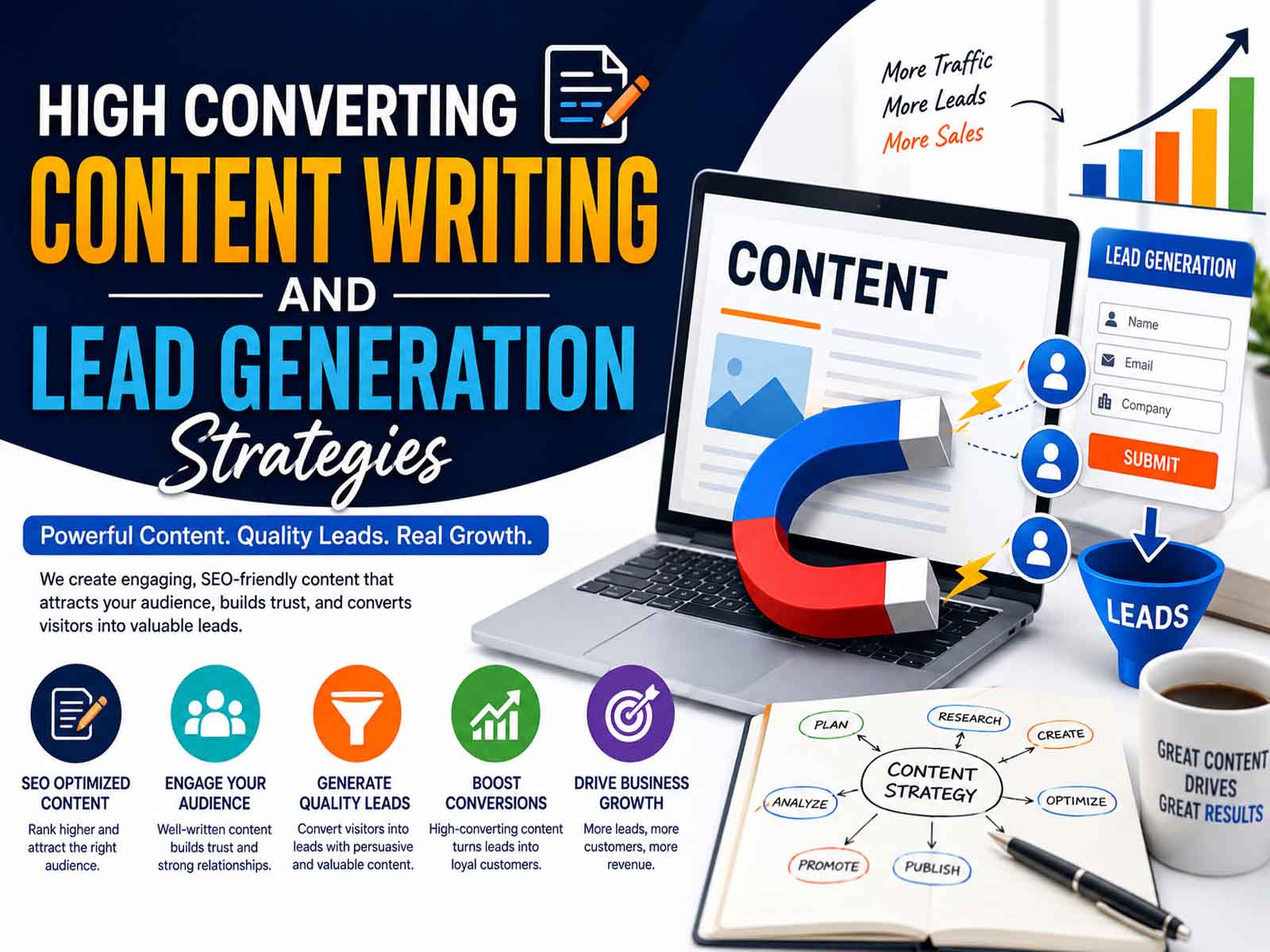
High Converting Content Writing and Lead Generation Strategies
Introduction
In today's highly competitive digital marketplace, businesses are constantly searching for effective ways to attract, engage, and convert potential customers. While advertising, social media marketing, and search engine optimization play critical roles in business growth, content remains the foundation of every successful digital marketing strategy. High converting content writing and lead generation strategies help businesses create meaningful connections with their target audiences while driving measurable results. Effective content not only informs and educates readers but also inspires them to take action, whether that action involves making a purchase, submitting an inquiry, subscribing to a newsletter, or requesting additional information.
The modern consumer is more informed than ever before. Before making purchasing decisions, customers conduct extensive research, compare options, read reviews, and evaluate brands online. Businesses that provide valuable, relevant, and engaging content throughout this process position themselves as trusted authorities and increase their chances of converting prospects into loyal customers. High-quality content serves as a bridge between customer needs and business solutions, creating opportunities for meaningful engagement and long-term relationships.
As digital competition continues to increase, organizations must develop comprehensive content strategies that align with customer expectations and business objectives. Effective lead generation requires more than simply attracting website visitors. It involves nurturing relationships, building trust, and guiding prospects through the decision-making journey using persuasive and strategically crafted content.
Understanding the Relationship Between Content and Lead Generation
Content writing and lead generation are closely connected because content serves as the primary communication channel between businesses and potential customers. Every blog post, landing page, website article, email campaign, and social media update contributes to shaping customer perceptions and influencing purchasing decisions.
Lead generation begins when potential customers discover valuable content that addresses their specific needs or challenges. Informative and engaging content attracts visitors through search engines, social media platforms, and referral sources. Once visitors arrive, strategically written content encourages them to remain engaged, explore additional resources, and ultimately provide contact information or take desired actions.
Successful businesses recognize that content is not simply a marketing asset but a powerful conversion tool. By understanding audience pain points, preferences, and motivations, organizations can create content that resonates deeply with readers and inspires meaningful engagement.
A strategic approach often incorporates advanced content marketing and customer acquisition strategies for sustainable business growth, enabling businesses to attract highly qualified leads while strengthening brand authority and market visibility.
Creating Customer-Centric Content
Customer-centric content focuses on delivering value rather than promoting products or services aggressively. Modern consumers respond positively to brands that understand their challenges and provide practical solutions. Content should address customer questions, concerns, and goals while demonstrating expertise and credibility.
Creating customer-focused content begins with understanding the target audience. Businesses must identify customer demographics, interests, purchasing behaviors, and common challenges. This information helps content writers develop materials that align with audience expectations and provide relevant solutions.
When customers feel understood and supported, they are more likely to engage with content and develop trust in the brand. Trust serves as a critical factor in lead generation because customers prefer doing business with organizations they perceive as reliable and knowledgeable.
Effective customer-centric content also emphasizes clarity, authenticity, and usefulness. Readers should feel that the content genuinely helps them achieve objectives or solve problems rather than simply serving as a sales pitch.
The Importance of SEO in Content Conversion
Search engine optimization plays a vital role in content visibility and lead generation success. Even the most valuable content cannot generate leads if potential customers cannot find it. SEO ensures that content appears prominently in search engine results when users search for relevant topics, products, or services.
Keyword research forms the foundation of effective SEO content writing. Businesses must identify search terms that align with customer intent and incorporate them naturally throughout content. Strategic optimization improves rankings while maintaining readability and user experience.
An increasingly effective strategy includes professional SEO content development and lead conversion optimization solutions that combine search visibility with persuasive messaging. This approach enables businesses to attract targeted traffic while maximizing conversion opportunities.
SEO also enhances content credibility. Users often perceive higher-ranking websites as more trustworthy and authoritative. Strong search visibility increases exposure, drives organic traffic, and creates additional opportunities for lead generation.
Developing High-Converting Landing Pages
Landing pages represent one of the most important components of lead generation strategies. Unlike general website pages, landing pages are designed specifically to encourage visitors to complete desired actions. Effective landing pages combine persuasive copywriting, compelling offers, and strategic design elements to maximize conversions.
High-converting landing page content focuses on benefits rather than features. Visitors want to understand how products or services will improve their lives, solve problems, or create value. Clear messaging, strong headlines, and persuasive calls to action guide users toward conversion objectives.
Trust-building elements such as testimonials, case studies, client success stories, and industry credentials further enhance landing page effectiveness. These components reduce uncertainty and increase customer confidence.
Successful landing pages maintain focus by eliminating distractions and emphasizing a single conversion goal. This streamlined approach improves user experiences and increases the likelihood of generating qualified leads.
Building Authority Through Educational Content
Educational content serves as a powerful tool for establishing expertise and attracting potential customers. Businesses that consistently share valuable knowledge position themselves as trusted authorities within their industries. This authority influences customer perceptions and strengthens lead generation efforts.
Blogs, guides, whitepapers, industry reports, and educational resources help businesses demonstrate expertise while addressing customer challenges. Readers who benefit from educational content are more likely to view the organization as a reliable source of information and solutions.
Authority-building content also contributes to long-term SEO performance by generating backlinks, social shares, and audience engagement. These factors improve visibility while expanding opportunities for customer acquisition.
Educational content should focus on delivering genuine value without excessive promotional messaging. Customers appreciate transparency and expertise, making educational resources highly effective for relationship building and lead nurturing.
Content Personalization and Audience Engagement
Personalization has become an increasingly important aspect of content marketing and lead generation. Modern consumers expect relevant experiences tailored to their interests and preferences. Personalized content increases engagement by delivering information that aligns closely with individual needs.
Businesses can personalize content through audience segmentation, behavioral analysis, and customer data insights. Tailored messaging creates stronger connections and improves the likelihood of conversion. Personalized emails, targeted landing pages, and customized recommendations all contribute to enhanced customer experiences.
Engaged audiences are more likely to interact with content, share information, and progress through the sales funnel. Personalization strengthens these interactions by making content feel more relevant and valuable.
Organizations that prioritize personalized communication often achieve higher conversion rates, improved customer satisfaction, and stronger long-term relationships.
Leveraging Content Across Multiple Channels
Content marketing extends beyond websites and blogs. Successful lead generation strategies utilize multiple channels to maximize reach and engagement. Businesses must distribute content strategically across search engines, social media platforms, email campaigns, video channels, and online communities.
Multi-channel distribution increases visibility while providing customers with multiple opportunities to engage with the brand. Consistent messaging across channels reinforces brand identity and strengthens customer trust.
Content repurposing further enhances efficiency and effectiveness. A single piece of high-quality content can be transformed into blog articles, social media posts, videos, infographics, newsletters, and downloadable resources. This approach extends content lifespan while maximizing return on investment.
The integration of comprehensive digital content marketing and lead generation growth strategies enables businesses to create cohesive customer experiences across multiple touchpoints while supporting long-term growth objectives.
Nurturing Leads Through Strategic Content
Lead generation does not end when a prospect provides contact information. Effective lead nurturing strategies help maintain engagement and guide prospects toward purchasing decisions. Strategic content plays a central role in this process by delivering relevant information throughout the customer journey.
Email marketing campaigns, educational resources, product demonstrations, case studies, and customer success stories help nurture relationships while addressing customer concerns. These materials provide ongoing value while reinforcing brand credibility.
Lead nurturing content should align with customer needs at each stage of the decision-making process. Prospects in the awareness stage require educational content, while those closer to conversion may benefit from detailed comparisons, testimonials, and product-specific information.
Consistent nurturing efforts improve conversion rates and increase the likelihood of turning prospects into loyal customers.
Measuring Content Performance and Conversion Success
Successful content writing and lead generation strategies rely on continuous measurement and optimization. Businesses must track performance metrics to understand what works and identify opportunities for improvement.
Key metrics include website traffic, engagement rates, conversion rates, lead quality, bounce rates, time on page, and customer acquisition costs. These insights help organizations refine content strategies and improve overall effectiveness.
Data-driven decision-making enables businesses to allocate resources more efficiently and focus on high-performing initiatives. Regular analysis supports continuous improvement while ensuring alignment with business objectives.
Performance measurement should be viewed as an ongoing process rather than a one-time activity. Continuous optimization helps businesses remain competitive and responsive to changing market conditions.
Future Trends in Content Writing and Lead Generation
The future of content marketing will be shaped by technological innovation, evolving customer expectations, and increasing competition. Artificial intelligence, predictive analytics, voice search optimization, and advanced personalization technologies are expected to play increasingly important roles in content development and lead generation.
Customers will continue demanding authentic, valuable, and personalized experiences. Businesses that embrace innovation while maintaining a strong focus on customer needs will be better positioned for long-term success.
Future-ready organizations understand the importance of adaptability and continuous learning. By staying informed about emerging trends and refining strategies accordingly, businesses can maintain competitive advantages and achieve sustainable growth.
Conclusion
High converting content writing and lead generation strategies are essential for businesses seeking sustainable growth in today's digital landscape. By creating customer-focused content, optimizing for search engines, developing persuasive landing pages, building authority, personalizing experiences, and nurturing relationships, organizations can attract qualified prospects and convert them into loyal customers.
Successful lead generation requires a comprehensive approach that combines creativity, strategy, technology, and continuous optimization. Businesses that invest in high-quality content and prioritize customer value establish stronger brand authority, improve conversion rates, and achieve long-term success.
As digital marketing continues to evolve, content will remain one of the most powerful tools for engaging audiences, building trust, and driving business growth. Organizations that embrace effective content writing and lead generation strategies will be well-positioned to thrive in an increasingly competitive marketplace.