- 10 July 2026
- By Admin
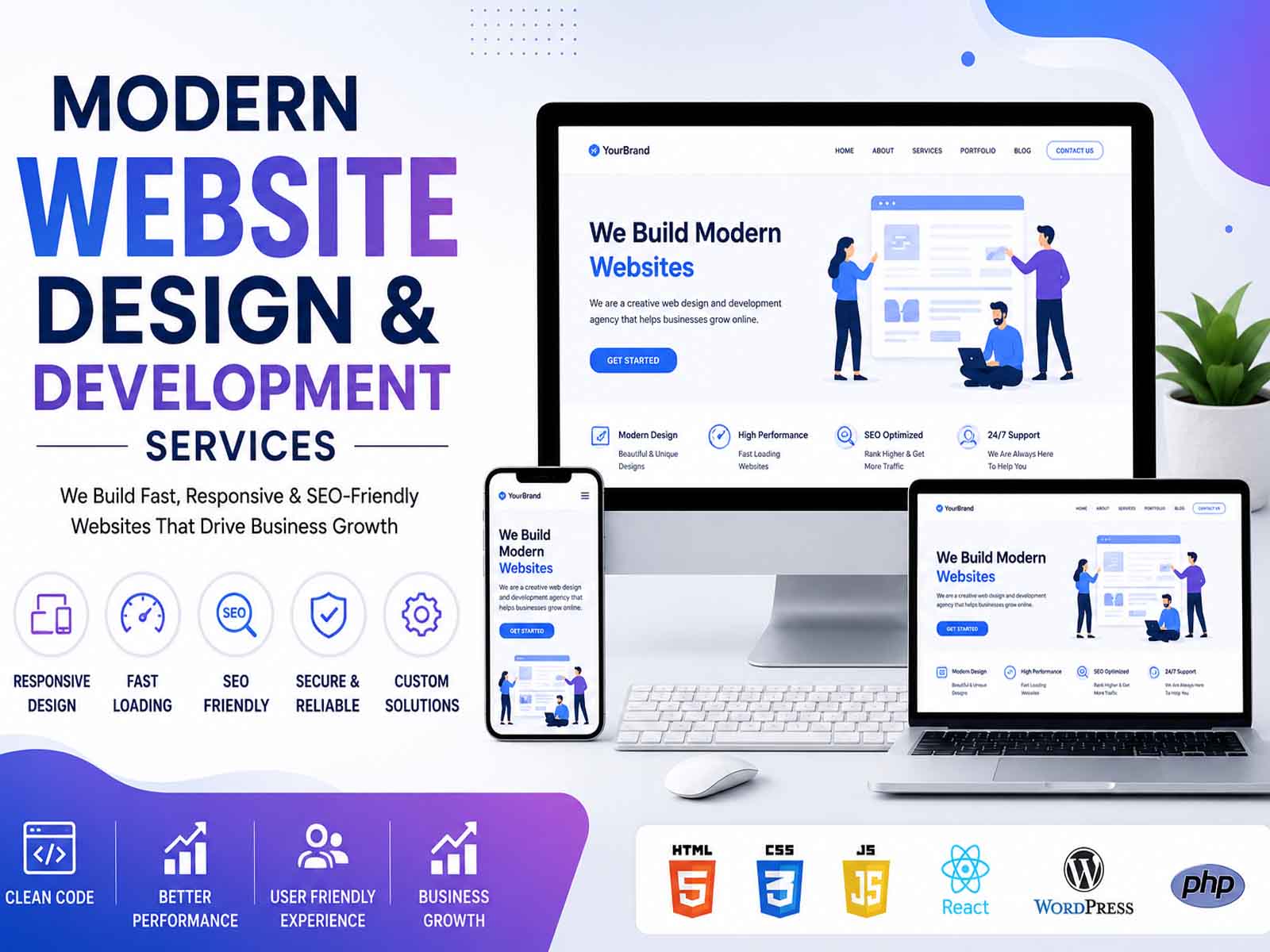
Modern Website Design and Development Services
Introduction
In today's digital world, a business is often judged by the quality of its website. Whether it is a startup, a growing company, or an established enterprise, having a modern, fast, and user-friendly website is essential for attracting customers and building credibility. Modern website design and development services go beyond creating an attractive layout. They combine advanced technology, seamless user experience, high performance, and business strategy to deliver websites that support long-term growth.
This article explains the concept of modern website design and development, its essential components, and how a professionally developed website contributes directly to business success. Businesses investing in Professional Website Development Services for Businesses gain a competitive advantage through better performance, stronger branding, and improved online visibility.
The Concept of Modern Website Design
Traditional websites were built mainly to display information. Today's users, however, expect much more. A modern website should load quickly, work perfectly on every device, offer intuitive navigation, provide an attractive visual experience, and build trust with visitors.
Modern website design is not simply about selecting colors and fonts. It is a strategic process that combines branding, user psychology, functionality, accessibility, and business objectives to create an engaging digital experience.
The Importance of Responsive Design
Most internet users now access websites through smartphones and tablets. Responsive design ensures that a website automatically adapts to different screen sizes, providing an excellent viewing experience on desktops, tablets, and mobile devices.
Google follows a mobile-first indexing approach, making responsive design essential for both user experience and search engine rankings. Professional web developers always prioritize responsive layouts to maximize accessibility and improve SEO performance.
User Experience (UX) and User Interface (UI)
User Experience (UX) and User Interface (UI) are at the heart of modern website development. UX focuses on how users interact with a website, ensuring they can easily find information and complete desired actions. UI focuses on visual elements such as buttons, typography, colors, spacing, and layouts.
An effective UX/UI strategy includes:
- Simple and intuitive navigation.
- Clear call-to-action buttons.
- Consistent branding.
- Readable typography.
- Logical content organization.
When UX and UI work together effectively, visitors stay longer, engage more, and are more likely to convert into customers.
The Role of Website Loading Speed
Website speed is a critical factor for both user satisfaction and search engine optimization. Modern users expect pages to load within seconds, and slow websites often experience higher bounce rates and lower conversions.
Professional developers improve website speed through several optimization techniques:
- Image compression and optimization.
- Clean and efficient coding.
- Browser caching.
- Content Delivery Networks (CDNs).
- Reducing unnecessary plugins and scripts.
Fast-loading websites provide a better user experience while improving Google rankings and overall business performance.
Modern Development Technologies
Website development technologies continue to evolve rapidly. Professional developers use modern frameworks and platforms to build secure, scalable, and high-performing websites.
Popular technologies include:
- Frontend Frameworks: React, Vue.js, and Angular.
- Backend Technologies: Laravel, Node.js, and Django.
- Content Management Systems: WordPress, Shopify, and Webflow.
- Modern Frameworks: Next.js and Gatsby.
The choice of technology depends on business goals, project complexity, scalability requirements, and future growth plans.
The Importance of Custom Website Development
Every business has unique requirements, making custom development increasingly popular. Instead of relying on generic templates, businesses are investing in Custom Website Development Solutions that are specifically designed to match their brand identity and operational needs.
The advantages of custom website development include:
- Unique brand-focused design.
- Greater scalability.
- Enhanced security.
- Customized functionality.
- Improved performance and flexibility.
Although custom development requires a higher initial investment, it delivers greater long-term value and reliability.
E-Commerce Website Development
The rapid growth of online shopping has increased the demand for professional e-commerce websites. A successful online store should include secure payment gateways, easy product navigation, mobile-friendly shopping experiences, fast checkout systems, and effective inventory management.
Platforms such as Shopify, WooCommerce, and Magento allow businesses to build scalable online stores that can be customized according to their specific requirements.
Website Security Matters
Security is an essential component of modern website development. With cyber threats becoming increasingly common, businesses must protect customer data and website integrity through professional security practices.
Key security measures include:
- SSL certificates.
- Secure coding standards.
- Regular software updates.
- Firewall protection.
- Data encryption.
Secure websites not only protect users but also improve trust and support better search engine rankings.
SEO-Friendly Website Structure
A visually appealing website alone is not enough if it cannot be found through search engines. Modern developers build websites using SEO Friendly Website Development Services that follow technical SEO best practices.
Essential SEO elements include:
- Clean URL structures.
- Proper heading hierarchy.
- Optimized meta tags.
- Fast loading performance.
- Mobile responsiveness.
- Image alt text optimization.
A strong SEO foundation helps improve search visibility and generate sustainable organic traffic.
The Role of Content Management Systems (CMS)
Businesses increasingly prefer websites that they can manage without technical expertise. Content Management Systems such as WordPress provide flexibility for publishing blogs, updating products, managing images, and editing website content with ease.
A reliable CMS reduces maintenance costs while allowing businesses to keep their websites updated regularly.
Website Maintenance and Support
Website development is not a one-time project. Continuous maintenance is necessary to ensure optimal performance, security, and reliability.
Regular website maintenance includes:
- Software and plugin updates.
- Security monitoring.
- Performance optimization.
- Bug fixes.
- Website backups.
Ignoring maintenance can result in security vulnerabilities, slow performance, and a poor user experience.
Website Design and Branding
A professional website serves as an extension of a company's brand identity. Elements such as color schemes, typography, imagery, layouts, and messaging should consistently reflect the brand's personality and values. Strong branding helps businesses create memorable experiences that build trust and customer loyalty.
Analytics and Continuous Improvement
Launching a website is only the beginning. Professional businesses continuously monitor website performance using tools such as Google Analytics and Google Search Console to understand visitor behavior, identify top-performing pages, analyze traffic sources, and improve conversion rates.
Data-driven improvements ensure that the website continues to evolve alongside changing customer expectations and business objectives.
Conclusion
Modern website design and development services have become essential for businesses operating in today's competitive digital environment. A professionally developed website is more than an online presence—it is a powerful business asset that strengthens brand credibility, improves user experience, increases search engine visibility, and drives long-term growth. By combining responsive design, advanced technology, strong security, SEO optimization, and continuous maintenance, businesses can build websites that deliver measurable results and sustainable success.